Lately, I’m Not Sure If It Really Matters If I Make A Sound (or, On Brinkmanship)
Hardcore Will Never Die, But You Will.
Hardcore will never die, but you will. And this is an expression that I had not given consideration to in a long time, but recently recalled it, and in doing so, I wondered if it was, perhaps, a way into all of this. Because you see, things are bad right now. In fact, nothing feels good. At all. On the phone, I tell my best friend, more often than she wishes to probably hear, and more often than I want to confess, that I am afraid. I am afraid that it is always going to feel like this. And when she responds, she speaks with a gentleness and a thoughtfulness and she tells me, “I know. But this is not forever.” She speaks with a kindness and also, at times, concern, and rightfully so. And she says, “I need you to hold on, okay?” Because I think that we are both desperately clinging to the idea, or the promise, of some kind of hope. That things will, in time, no longer seem as bad as they do in this moment. And, I mean, I am talking about the world. Or, something much larger than just myself. Because it is deflating. It is disheartening. But I turn this inward, of course. I think about myself. Or my own experiences. This year. The year before that. The year before that. The experiences of those closest to me. And I am clinging to this hope, or this potential, that someday I will feel differently.
Hardcore will never die, but you will. And a number of months ago, I watched a video, online, filmed at a punk and hardcore music festival. And I will be honest with you. I do not remember the name of the festival or what American city it was held in. And I do not remember the name of the band in this specific video. This specific video—I came across it in the roundabout way you often do comes across videos online. And in this one, the band featured, as they were taking the stage, was using the song “Clarity” as their walk-on music. “Clarity,” from 2013, by the German electro-pop producer Zedd and featuring vocals from the British vocalist who performs under the name Foxes. And as the members of the band were positioning themselves on stage, and tuning their instruments, the frontman of this group and I apologize because again I do not remember their name but the frontman, as the first minute and eight seconds of the song were playing, started to get the members of the audience worked into an actual frenzy, with many of them belting out the words to the song. “Yeah, sing that shit,” this band’s frontman said into the microphone, watching the bodies of primarily young men already tumbling and flailing in a mosh pit that had opened up before the first real song of this band’s set had even been played.
And if you are not familiar with the song “Clarity,” by Zedd, featuring Foxes, there is an intentional and meticulously paced build-up that occurs within the first minute and eight seconds. We are, as listeners, introduced to the fluttering and gossamer synthesizer tones that swirl around, finding themselves and reaching towards the propulsion of something bigger. We are taken through a short first verse that is not inconsequential exactly but it is a vessel, or a gateway, to the theatricality, or emotional manipulation that occurs when the vocals become more impassioned in how they are delivered, and the way they soar, and hang, within the melody. “Cause you are the piece of me I wish I didn’t need,” Foxes, born Louisa Rose Allen, bellows with a conviction. “Chasing relentlessly—still fight and I don’t know why.”
And if you are not familiar with the song “Clarity,” by Zedd, it is the kind of song that hinges itself on an enormous, impactful musical drop that occurs—not taking the place, exactly, of a proper chorus. But this drop is, in this kind of contemporary popular music, the moment that listeners are expecting. They know it’s coming. And even in that expectation, there is surprise, and delight, when it arrives, right on cue.
And there are the moments, before the drop. The emotions becoming swollen in a tension that can only be released in one way. “If our love is tragedy, why are you my remedy,” Foxes bellows, the synthesizers and rhythm skittering and rippling just underneath her. “If our love’s insanity, why are you my clarity.” And it is on that last word. The titular word. Clarity. That the beat does drop, and you are given that release you have been waiting for.
And I tell you all of that, because I need to tell you this. That hardcore will never die, but you will. I will too, one day. I understand that. And in the video, filmed at a punk and hardcore festival somewhere in America, a band on the festival bill used the first minute and eight seconds of “Clarity” as their walk-on music and in already creating a frenetic energy within the audience—of young men both pushing their way towards the front of the stage, emphatically throwing their hands in the air, shouting along to the words, and flailing and writhing in a large, volatile circle, the song never makes it to the point where it drops. In this video, you hear Foxes sing the final line of the chorus—“If our love’s insanity, why are you my clarity,” and in that moment, the band slams down on the earth-shattering opening notes of the first song in their set. And the frontman, who had so gleefully encouraged the audience to sing along, lets out a guttural, terrifying howl.
You see, things are bad right now. In fact, nothing feels good. But I am telling you all of that because of something about that moment. Watching this video. Seeing this unfold in a kind of joyous way. It made me feel hopeful. Or gave me a kind of peace. Something about that moment said to me that maybe. Just maybe. In time. Things will feel better again.
That even when nothing feels good. And hasn’t for a long time. That there is still good for us to cling to when it finds us.
Hardcore will never die, but you will. And this is an expression that I had not given consideration to in a long time, but recently recalled it, and in doing so, I wondered if it was, perhaps, a way into all of this. Because in the allure, yes, and the compulsion, what I do find amongst the most genuinely interesting is the dynamism, and the thoughtfulness. Because I am thinking about this band, on stage at a punk and hardcore festival, and yes, of course, it is a little bit of a wink, or a smirk to the audience, but it is done so with a surprising earnestness, using a song like “Clarity” as their walk-on music. And how, when nothing feels good, there are still these very small, surprising, human moments. That make us laugh. Or make us smile. Even if it is fleeting. And it, too, can seem like a little wink, or smirk, to the audience, but is done so, also, with surprising earnestness and care—but I am also thinking about the dynamism and thoughtfulness that Akil Godsey, the frontman for the Baltimore-based hardcore band, End It, has.
Godsey, even though he spends a large portion of his role as the group’s vocalist delivering his lyrics in a high, often breathless larynx shredding shout, he does truly have a powerful singing voice—when he uses it, or rather, how he uses it, there is a self-aware theatricality, or a subtle kind of humor to it, adding an over-emphasized vibrato to the long-sustained notes. A wink. Or a smirk. To the audience. But done so with thoughtfulness or earnestness. Which is what he does at the beginning of the band’s live show. Casually stalking around the front of the stage, he will sing, unaccompanied, a portion of whatever song is on his mind at that moment, as an intro of sorts, before the rest of End It begin playing.
This act itself is, of course, anticipated now, by the audience. But there is the surprise of what song he will select. The surprise comes in how he will sing it, and the rhythm he finds for his voice and his voice alone. And it is the surprise, and often wonderment on the faces of those closest to the stage. Looking on in a kind of awe, or admiration, but also a genuine delight. This small, human moment. Smirking and winking but done with earnestness and care. This instance, however fleeting, of hope.
There is, for me, an allure to punk rock. Or hardcore. Or the adjacencies within the larger genre descriptor. I am hesitant to say that there is a seduction that occurs. But there is something about it all—the abrasive and the confrontational nature of it. Even in the discomfort that it might cause, it does compel me.
Because there is the dynamism, and thoughtfulness. And I find that to be the most genuinely interesting. When you are able to look even slightly beyond the aesthetic of howled or screamed lyrics and of ferocious and snarling guitars and of the bodies of young men throwing themselves against one another in an ever undulating circle that has formed in front of the stage of a punk rock show, there is a thoughtfulness. There is consideration that is given.
Music such as this. Well. I mean. There are a lot of genres, or styles, or whatever, that certainly can and and will do this, but punk, in its inherently confrontational and aggressive nature, can keep listeners at an arm’s length. I don’t think that’s the point. But it is something. It’s not nothing. A portion of the point, or conceit, but not the whole. It is a music that you do have to work towards. You have to find your way in. However long that might take. However cumbersome that might be. You might tiptoe on the outskirts of it for years and years before you find yourself, in a place, for whatever reason, that it suddenly feels much more accessible. That something, even in the dissonance and the fury, becomes welcoming, in a way. Inviting. There is an invitation. You arrive at the compulsion. There is certainly discourse within, between artists, or acts, or styles but I am often thinking about, and often moved by, the communal elements, or the way there is a connection to the audience. A real connection. These small instances, however fleeting, that offer us hope.
As an appreciator of contemporary popular music, and as an analytical listener, I am, and I think have been for much longer than I understood, a lyrics person. I comb through verses, and choruses, looking for depth, and larger meaning, and I fixate on specific phrase turns with the intention of finding, the longer I fix my gaze on an album’s liner notes, and the more attention I pay when I listen, what are often unflattering reflections of myself.
Punk music is both emotional and not. It is not emotional, at least not for me, as a listener, in a way that stirs us from deep within. Moves us to tears. The way something swells inside and we are unable to prevent the emotional response we have. Punk is emotional, though, because there is emotion present. Of course there is. There is heart to it. A heartbeat fast and loud. However, the emotions, or thoughts, presented are perhaps not the kind where we are met with reflections of ourselves, or depictions of things we immediately connect to. I am a lyrics-based listener, or one who appreciates songwriting, as a kind of writing, but not every kind, or style, of contemporary popular music is solely based on its lyricism. There is music, and I am, certainly, still learning how to appreciate it—but there is music that is firmly steeped within a vibe. A feeling. A sensation. It asks us, or in some circumstances, demands us, to experience it as a whole, with all the elements present being of importance. All the elements working towards something.
I stop short of saying End It is an unwelcoming band, or that their debut full-length, Wrong Side of Heaven, is inaccessible. But. It does ask things of us. Patience, at least at first, is required. I am uncertain about the expression “warm up to it,” but it is an album that you do need time to orient yourself, and find your way into the world that it has fully constructed and is ultimately willing to destroy from the moment it begins. And I think what I am most genuinely interested in, or what does compel me, is what your experience is, then, with the album, during your first listen, and during subsequent listens. How does it reveal itself to you, more and more, each time.
Because there is this dynamism, and this thoughtfulness. Consideration given. End It, specifically on Wrong Side of Heaven, is working towards cultivating a feeling, or a vibe. And it is easy to get caught up in that. Or, rather, the challenge that presents itself is to look at, or appreciate, or even analyze, the individual elements.
Wrong Side of Heaven is intended to be experienced from beginning to end, uninterrupted. I don’t consider that to be too much of an ask. A lot of albums, regardless of their genre, are meant to be appreciated as a whole. You can, of course, select specific songs from this record, and enjoy them outside of the world the band has created. And you are not doing anyone a disservice, really, in listening that way. But this uninterrupted intention comes from how absolutely unrelentingly paced the record is. And I think that comes with the genre. Or the aesthetic. End It leaves themselves little if any room to breathe in between songs, with the blistering end of one track violently colliding into the beginning of the next.
It isn’t oppressive, exactly. It is intense. It can be cathartic. The album is not inaccessible. It does just take time and patience. It asks things of us. And there is this allure and compulsion that does come from the volatile nature of this kind of music. There is a danger to it. An unease.
Punk, I think, can often sound ramshackle in nature. Or raw. That is expected. Or what one might anticipate. I say this not to imply that End It, or specifically, Wrong Side of Heaven, is slickly produced, or the result of being overworked in the studio. It is, if anything, the sound of an incredibly sharp and dexterous group—engineered in such a way that there is just the right amount of balance, and depth, created between the actual thundering, pummeling of the drum kit, the searing, thrashing electric guitars, and the low chugging of the bass notes. There is this precision across the album—and there has to be. Because part of what makes Wrong Side of Heaven so fascinating, and End It such a compelling act, is the fun you can hear the band having within the confines of a song, yes, but also how the pacing, and tempo, of a song can shift without much advance notice, if any.
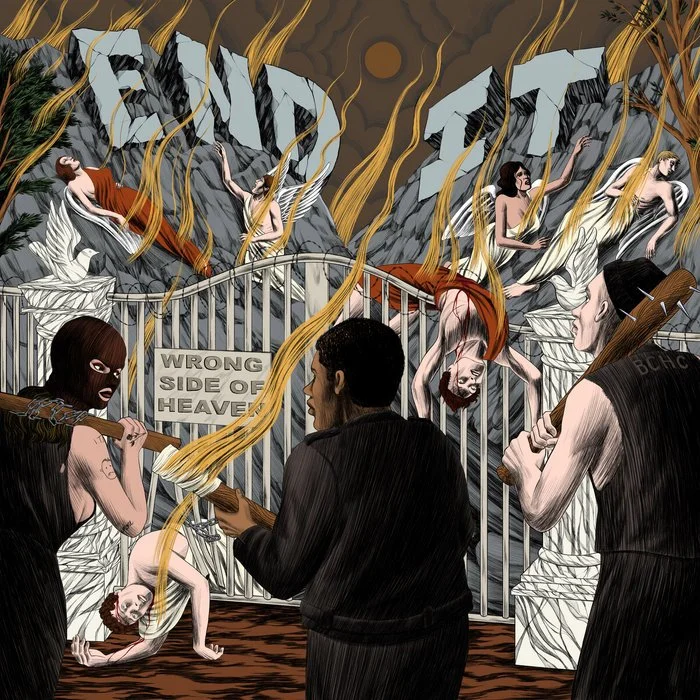
And there is a knowing wink. Or smirk. A theatricality. I hesitate to use the word “camp,” but throughout Wrong Side of Heaven, there is this subtle self-awareness. Like the band is playing into certain musically aggressive tropes. And, I mean, it is, from start to finish, an incredibly antagonist listen—but the more you listen, and the more you note these details. These winks. Smirks. This undercurrent of humor. It is an exhilarating album, certainly. But it is also, without question, wildly fun in a way that is surprising. End It are having fun, even as the first few notes of the titular, introductory track, come crashing down—“Awww shit,” Godsey sneers, playfully, and confrontationally, as the noise swells behind him.
Then later, as the minute long piece continues to unfold, there is a pause between notes when everyone bellows, from the depths, “Wrong side of heaven!,” before the onslaught of sound returns, propelling itself forward to an end, where barely a single breath is taken before the group throws itself, headfirst, into the torrential, breakneck pacing of the second track, “Pale Horse,” where you can literally feel the deep inhalation Godsey takes before viscerally shouting the song’s opening line, which he delivers with an impressive, unrelenting cadence.
Hardcore will never die, but you will. And there is a multitudinous nature within all of us. I say that part in jest, but also with sincerity. We can be drawn to myriad things for any number of reasons. I often find myself at a loss, at times, when someone asks me what kind of music I listen to. My default has been to say “sad white people music”—a poor attempt at a joke. We can be drawn to sorrow and introspection. We can be entranced and delighted by the dazzle of bold, technicolor pop music. We can appreciate the storytelling, the skill, and the production of hip-hop from the early to mid 1990s, specifically coming from the East Coast. We can marvel and find comfort, or solace, in old jazz records.
And we can be compelled by the confrontational. The aggressive. The noisy and the dissonant. A flash of danger. The unsettling.
Punk music, or hardcore, or their adjacencies, can often be angry. Volatile. It is, I think, and maybe this is a generalization, that the lyrics do not take a backseat exactly, but are also not always the focal point. It is, I think, about a feeling. Or a vibe. Something conjured and sustained until a final, visceral gasp. But there are political, or socioeconomic undercurrents in punk. Larger issues, or concerns to be addressed as they are able. And this is what I do find most compelling about End It, and Wrong Side of Heaven. Because it is a fun album. It’s noisy and rollicking and alluring. The torrential way the instrumentation unfolds, song after song, is exciting. But there is an intelligence here as well.
It is thoughtful. And it is dynamic. The dynamism, really, comes from this sharpness in the lyricism, and using this specific aesthetic as the vessel.
There is antagonism and unrest that just surges throughout Wrong Side of Heaven, but it is not just unrest, or a kind of anger, just for the sake of it. It is an album that provokes—but the provocation occurs for a reason, with Godsey, in his writing, both observing and reacting.
“Wanna sell the narrative that you’re built like us,” he barks on the album’s third track, “Exploiter.” “But when them bullets get to flying, towards the back you’ll rush,” then adding, just a few lines later, “You only care about us when your bank account lacks—pump fakin like shit. In your heart, you know you a bitch. You’re a try-hard, and I’m sick of it.”
This becomes more pointed on “Billion Dollar Question,” which opens with a blunt question. “Who must die to keep you in luxury.”
“Families torn apart—society divided. There’s no drug in the world that can help you hide it,” Godsey screams. “I make a quarter while you hoard your money. Smile in my motherfucking face but ain’t shit funny.”
Wrong Side of Heaven is not, in its entirety, a reflection on larger, societal injustices—there are places, especially further into the first side, and at the top of the second half, where Godsey turns his writing surprisingly inward, writing from a place that is personal, yes, or a little more revealing, but only to a point. Only what he is willing to share. And only what he is willing to share within this context—lyrics shouted, half-rapped, half-screamed, often quickly, or in a way that suggests a sense of urgency, like he is trying to cram as many thoughts, and revelations, as he can into the space provided. And this is not to say this reflective turn in some of the songs, like, “I, Lament,” is not genuinely interesting, and in this case, harrowing to hear. “Your unpaid labor—I have nothing to give,” he confesses. "You saw the best in me when I did not want to live.”
Ultimately, what makes Wrong Side of Heaven so exhilarating is the way it approaches issues much larger—there is a fearlessness in using the platform you have to hopefully educate, inspire, or mobilize. Or, if anything, to give the listener something to consider. “Violence begets violence, and the whole world is blind,” Godsey shouts, on the album’s most politically charged track, “Anti-Colonial.” As the band is thundering in double-time behind him, he continues, “Reciting words in the hopes of being heard by the architect in the sky.”
“Earth shaken, lives shattered—give a motherfuck about whose life mattered,” he continues, as the music lowers, briefly to an omnibus rumble, then a distended, heavy snarl. “Broken bones, air strike—there’s no reason for these children to die tonight. Greed. Hatred. Neglect. Inshallah, in the next life, you pay your debt. A better tomorrow for you and me. Forever we will scream for those unseen.”
Hardcore will never die, but you will. And this is an expression that I had not given consideration to in such a long time, but in recently recalling it, I wondered if this was, perhaps, the way into all of this. This kind of reflection. And there is an irony, however slight. A wink. A smirk. Something self-aware. Campy. Theatrical. Whatever you want to call it. There is such a surprisingly easy access point buried near the end of Wrong Side of Heaven. Not as a joke, but perhaps a misnomer.
The album’s penultimate track is, in comparison to the rest of the record, quite startling in how melodic and pop-oriented it is—a cover of the song “Could You Love Me.” And it’s funny. This kind of a detail. “Could You Love Me,” in advance of Wrong Side of Heaven’s arrival in full, was released as a single—the fourth, and final. The blistering, searing “Pale Horses” was its first. And I guess what I continue to return to, the more time I have spent listening to this record, is how, “Could You Love Me,” as a song, and a rather faithful cover, is by no means indicative of the group, really, or the overall sound of the album. But that’s the point. Or the intention of placing it on here.
There is the allure. Even with the antagonism and the confrontational nature. There can be, however brief, this innocuous facade. A place where, even when the guitars begin to thrash a little heavier within the enthusiastic conclusion, the tension the album walks on the surface of is temporarily relieved.
You could say the same thing I think, or really see the larger homage taking place, in speaking about the original. From their 1996 effort Independent, “Could You Love Me” was performed by the New York City hardcore band Maximum Penalty. And it, at least even in a cursory listen of their other material, is not entirely indicative of their sound either.
A “love song,” or a song about love, may, at first, seem out of place on a record like Wrong Side of Heaven. It isn’t. Not really. It is a little bit of a surprise. It is the only song where Akil Godsey actually sings the entire time—showing out just a little bit in the way his rich voice quivers and holds onto the notes until the very last possible second before he inhales and belts out the next line. And the band members themselves do not feel stifled at all by a song that is inherently slower and much less volatile in structure. It is, of course, infectious. But that is part of the allure. Or what compels. End It walk the line here, here specifically, with the earnestness and self-awareness. The wink and the smirk. The fun that they are having with it, and want us to have while listening but also the desire, across the board, to be taken seriously.
Hardcore will never die, but you will. And this is an expression that I had not given consideration to in a long time, but recently recalled it, and in doing so, I wondered if it was, perhaps, a way into all of this. Because you see, things are bad right now. In fact, nothing feels good. But what I wish to tell you is that here, across the camp and the confrontation and the space where those things ultimately converge into one another, there is a kind of hope. A hope from the thoughtfulness and the dynamism. Just maybe. In time. Things will feel better again. That even when nothing feels good and hasn’t for a long time, there are still these moments, presented to us, of something fascinating, or good, to cling to.
Near the conclusion of “Could You Love Me,” as the electric guitars chug and the percussion crashes around in a tempo a little slower than the rest of the song, Godsey asks the question, “Could you show me love.” It’s a question the song never answers. The song itself is a plea. The whole thing. An ask. Done so while teetering on the edge of a kind of desperation and what I realize is that, it is a question we are of course asking another. But we are also asking of ourselves.
*
Hardcore will never die, but you will. I will. I understand that. I have, in recent years, become more and more aware of my mortality, in the face of the often flimsy relationship I have with it. I turned 42 this year—by no means a milestone age, really, but certainly one I was surprised that I made it to. Because there were times, in the recent past, when I was uncertain. Because you see, things are bad right now. In fact, and maybe you understand. Or can acknowledge. That nothing feels good. At all. And in this admission, how many times, especially as of late, has my best friend looked me in the eyes and, with a voice both tender but also alarmed, said to me, “Please don’t go anywhere.” Because I think that we both continue to cling, desperately, to this idea, or a promise, of some kind of hope. That things, in time, will no longer seem as bad as they do now.
Why does paradise begin in hell. And this is an expression, or a question, I was introduced to this year. I hesitate to say that it is rhetorical, but there are no easy answers. Maybe it—the question, is not looking to really be answered, directly, but rather, it is something for you to sit with, and wonder.
And it perhaps this is how you consume, or learn, if you are like me. And maybe it is entirely too easy for me to fall into this kind of a pattern of perpetual discovery. But you find something—you read about an artist. A band. An album. You are drawn to it, for whatever reason. There is the allure. The seduction, of sorts. Not a mystery waiting to be solved, but of something new, and exciting, waiting to reveal itself. It finds you at the right time. When you are truly ready to be receptive. To find your way in, regardless of how inaccessible it might seem at first, or how it might be putting in overtime to keep you at an arm’s length. From there, you continue forward. Slowly. Maybe slowly at first. But your pacing will quicken. You are pointed in the direction of similarly minded artists. In niche, or speciality record labels. You keep following until you perhaps forget how you started down the path in the first place. What was the first thing. Does that even matter.
Paradise begins in hell. I never said that writing about music was easy. The trick, I think, is to make it appear effortless. To avoid, if you can, breaking the fourth wall in such a way that reveals the work that does go in. The thought. The time. The emotional labor. Writing, as a whole, as a craft, as your art form, can be rewarding and cathartic, but it is also extraordinarily challenging. Writing about music, specifically, I think, and maybe I am out of pocket in saying so. But it does require real thought, and precision. Articulation. It is easy to say you simply like or didn’t much care for a song, or an album. It is another thing entirely to explain why, which is what I am much more interested in. Or concerned with. Why something moved you. How you saw yourself in a song’s lyrics. Why you were impressed by the arranging, or a certain moment that occurs within a song. Why you are invested in not just the life of an album, within the year it was released, but how an album lives.
I never said writing about music was easy. Writing about specific kinds of music can be more difficult than others. Instrumental music, certainly, presents its own set of challenges because there are no lyrics for you to analyze, and you are asked to try, as you are able, detailing the sounds, yes, but also the feeling. Paradise begins in hell. And perhaps more intimidating, than challenging, is trying to thoughtfully write about non-English sung music.
Hardcore will never die, but you will. And paradise begins in hell. You fall into a pattern of perpetual discovery. You discover an artist. There is the allure. And it is easy—second nature, for me, really, to continue forward, reading, or listening, or learning, about similarly minded artists or niche record labels. You keep finding your way, and finding your way in, regardless of how inaccessible it might seem at first. And because things do move so quickly, I do not remember how I found myself here, after wading further out, away from the shallow end, but a number of months ago, I watched a video, online, filmed during the record release event for Haram’s Why Does Paradise Begin In Hell. Held on September 11th, 2025, the band performs on an outdoor stage. And there is, of course, the compulsion. The allure. It is unsettling but it draws you in. You cannot look away, honestly. On the wall, behind the stage, are two banners. One says, “Freedom for Palestine.” The other says, “Fuck ICE.”
And near the front of the stage, adjacent to the bodies of young men, flailing with reckless abandon to the music, throwing themselves against one another, fire is set to the Israeli flag.
You see, things are bad right now. In the world, at large, yes. That is impossible to ignore. I am thinking about myself, as well. And how nothing feels good. But I am telling you all of this, because there was something, again, about that moment. That video. The dedication to confrontation. To antagonism. To saying something. Representing something. It is admirable. And it gave me hope. Even in the volatile nature. A kind of peace. Such a bold declaration said to me that maybe. Just maybe. In time. Things will feel better again. There are still these small, surprising moments of good for us to cling to when it finds us.
To describe both the band Haram, which translated, means “forbidden,” and their second full-length, Why Does Paradise Begin In Hell, as intense—I don’t feel like that word is accurate enough to describe both the band themselves, as well as their work.
Founded in New York over a decade ago, the group released its debut, When You Have Lost, You Have Won, in 2017—and during the time between full-length releases, you can hear the focus, or growth, that has occurred in their sound. It is still brash, yes. But there is a sharpness, and a confidence to how the songs unfold musically. Paradise, comparatively, is also more dynamic and robust in how it is produced—it is, expectedly still very rough around the edges, and for as dark, and as claustrophobic of a record as Haram have wanted to make, there is comfortable breathing room between the instruments.
I think it is potentially a disservice to both, and perhaps it does ultimately not behoove me to draw comparisons, or juxtapose, Wrong Side of Heaven with Why Does Paradise Begin In Hell. Because there are similarities, sure. But they are also bands, and records, that are working from different pockets of the genre. I had initially felt that Haram was much less concerned about precision, or dexterity in playing, or was not as interested in melody—and was more interested in an overall feeling that operates from a distinctly from a place of extremes. But I realize that is not the case. The playing, especially the further you get into the first side of Paradise, is quite precise. The band is not as preoccupied with time or pacing shifts, but the there is a meticulousness to both the guitar work, as well as the frenetic percussion that propels each song forward.
Haram is, without question, much more confrontational of a band than End It. It isn’t that Paradise is a humorless album—but it is unwilling to surrender itself completely to the camp, or self-awareness. Or the winking and smirking. I don’t think that it is a record that wants to appear uninviting, but in the same breath, I would contend it is not exactly welcoming at first, either. Which is, at least for me, as the listener, partially why it is so fascinating. It's something that you do truly have to be ready for. And ready to find your way in. There are no easy access points on Paradise. And, really, if it shares only one thing with Wrong Side of Heaven, it is an album that, in the blistering, scorching speeds it whips itself forward with, and the regularly unrelenting nature of these songs—it is intended to be listened to, beginning to end, without interruption, as to immerse yourself fully into the experience.

Punk music, or hardcore, or their adjacencies, can often be angry. Volatile. It is, I think, and maybe this is a generalization, that the lyrics do not take a backseat exactly, but are also not always the focal point. It is, I think, about a feeling. A vibe. Something to be conjured and sustained until the final, visceral gasp. And there are political, or socioeconomic undercurrents in punk. It can be music that both has a message, and sends a message. Why Does Paradise Begin In Hell does exactly that.
There is an antagonism and unrest through every track, and the provocation that occurs here is done so with deliberate intention.
Haram’s lead vocalist, Nader Habibi, sings entirely in Arabic—a facet of the band that makes their music all the more uncompromising, and has made it slightly more intimidating to give it analytical consideration with thought and care—the thought and care it deserves. The word “care” maybe seems out of place when talking about something as cacophonic as Why Does Paradise, but tucked in underneath the torrential chugs of the electric guitar and the crashing hits of the snare drum and cymbals, are sharp, observational, and reactive lyrics that don’t just ask to be heard, and understood, but truly demand you take note.
The thing that is, the longer you spend time with Paradise, most fascinating, is the way it uses punk instrumentation and arranging, not as a disguise, or distraction, from the truly harrowing depictions within Habibi’s lyrics, but as a means to show, or create, the space where a kind of joy, and a heavy grief, can both exist, but also collide into something else entirely. It, again, seems like the wrong word. “Joy.” I hesitate to say that Why Does Paradise, at least in how it sounds, is “joyful,” but there is a jubilance at times—it is exuberant. It is exciting. It is an album that isn’t restless by any means, but it does refuse to remain stationary.
Haram makes no effort to hide their morals or their political beliefs. If performing while the Israeli flag burns in the crowd before them wasn’t a clear enough indication of where the group stands, the comprehensive liner notes to Why Does Paradise Begin In Hell includes this dedication on its final page—“To all who have sacrificed their lives for the sake of humanity, for the importance of reporting to the world the killing of innocent people in Palestine, Lebanon and beyond, we will not forget the lives you lived.”
The text is accompanied by four small photographs—Shireen Abu Akleh, and Hossam Shabat, both of whom were reporters for Al Jazeera, and both of whom were killed by Israeli forces—Akeleh in 2022, and Shabat in 2025; and Bisan Odwa and Wael Al-Doahdouh, both Palestinian journalists, and both of whom are currently living.
There is an additional dedication on the page prior, to Hind Rami Iyad Rajah—“You are innocent,” it reads. “We will not forget you.” Rajab was a five-year-old Palestinian girl killed in January 2024 by Israeli forces.
And it should not be a surprise, at all, that an anger, and a kind of exhausted frustration courses, and often boils over, within Hibibi’s writing. His lyrics, translated into English and printed within the album’s accompanying liner notes, offer truly harrowing observations and stark reactions—the bluntness of the phrasing, perhaps an unintended result of the Arabic to English translation, gives them a sense of both urgency, and bleak stoicism. And there is a clear call to action, right as the album opens, with the snarling, and pummeling opening track, “Persecution,” where, from underneath the thundering percussive hits and ferocious, distorted guitar chords, Hibibi screams, “People’s actions are the first thing we perceive. Fascist thought is the first thing we will reject.” Then, later, as he interjects the titular word, “They took the peace and the flag from all who see to understand. Persecution—pull yourself together and kill to save your own life. Persecution—when the military enters your home. Persecution—go and throw stones for your freedom.”
Not every song is intended to incite, though. Many are just of a reflective nature, and many reflect in a way that is graphic, but of course, it is a reality. “The bombs fall while people sleep,” Hibibi begins on “Whose Responsibility.” “When you know you are wrong and all their lives are lost—when they are all dead, whose responsibility is that,” he asks. “Every day I wake up and am surrounded by endless smoke,” he continues. “And every day I dream for the day I can live.”
Or, within the album’s second side, on the surprisingly melodic, or kind of bouncy “Secret”—this contrast created between the music itself, and the writing. “How do we wake up every day after without torture,” Hibibi asks. “When we see these things, what we say is secret.”
And I was hesitant to refer to Why Does Paradise Begin In Hell as a humorless album. It isn’t a record concerned with smirking or winking at its audience. It isn’t entirely lacking in self-awareness, but with the messaging it wishes to convey and the immediacy it needs to tell us, this is a collection of songs that are not entirely interested in indulging specific musical tropes. There is no real flirtation with camp, really, in how the songs are assembled, and any real musical flourishes, or moments of theatricality, come from the inclusion of, throughout, these more traditional-sounding Arabic melodies. At times they do come through in how Hibibi sings, but primarily, they arrive in the form of riffs, or solos, from the dexterous and distorted electric guitar, and they add not a playfulness exactly, but create a briskness, or dizzying feeling.
And there is, at times, a hypnotic nature to these songs. They aren’t soothing—far from it. But there is something that is ultimately assuring about them. A strange comfort. And in the way Hibibi’s voice weaves itself in between the layers of noise and crunch, there are these places that provide a kind of lulling when you allow yourself to settle into the rhythm, however frenetic it might be. I am thinking of the album’s fourth track, “The Last Night,” and how it wildly pushes itself forward through the use of a melody that is mesmerizing, before shifting into something much more explosive. Haram do something similar at the end of the first side, on the unrelenting and swirling “Hide Your Beauty, It Is For You,” which begins with Hibibi’s voice, low and ominous, kind of half-singing, half-talking, finding his way into an intricate rhythm anchored by the pummeled drum set, and some surprisingly atmospheric, detailed guitar string flicks.
Why does paradise begin in hell. It is a question asked, but the album never answers it. If anything, I think that it serves as an accurate reflection. Because I think within the torrent and the unrest, there is something so arrestingly beautiful that happens on this album and the world that it creates and doesn’t ask you take part in but rather demands you do it. You see, things are bad right now. In fact, nothing feels good. But what I wish to tell you is that across the fury, and antagonism, and bleakness, there is a kind of hope. A hope in thoughtfulness, yes. But also in fearlessness. The boldness and unabashed nature are admirable. There is the hope that just maybe, in time, things will feel better again. That even when nothing feels good and hasn’t for a long time there are still these moments, presented to us in sometimes unexpected ways, or something fascinating, or something good, to cling to.
It requires reading along with the translated lyrics, but close to the top of the album’s second side, on the briskly paced, brash, and energetic “The Answer,” Hibibi, at one point sings, “The road begins of the most difficult things. Love is the medicine of human beings.” The album is of course full of human moments, and experiences. But there is something surprising about this one. It is an instance, however brief, of a kind of tenderness that is not expressed elsewhere. A reminder. That there is connection. If we can find it. Something to cling to. That paradise begins in hell, yes, but this isn’t forever.
2. Is It All Like This?
I don’t often think of Eric Clapton and when I do, I suppose I think ill of him. I make hyper-specific jokes at his expense—the expense of his grief. It is easy to do. And I am perhaps a crueler person than you realized. An anecdote about Clapton that I have, for years before this one, known about, and truthfully thought about often, resurfaced a few months ago. And it resurfaced, when it did, because it involves his experience, or an exchange, with Michael Archer, the soul singer and songwriter known professionally as D’Angelo. Archer and Clapton were friends—two musically gifted individuals expressing their admiration for one another’s work. In the mid-2000s, when Archer struggled with substance use disorder, Clapton, to his credit, covered the cost of Archer’s rehabilitation at his own Crossroads treatment center.
Michael Archer passed away this year. I stop short of saying “unexpectedly,” because to us, as the public, who have already asked entirely too much of Archer over his career, it was unexpected. But for Archer, and those close to him, I am confident that this end was, in fact, completely expected. He had been diagnosed with pancreatic cancer—a diagnosis he did not widely disclose. At the time of his passing, in October, a family member was quoted as saying Archer had been in the hospital for months, and had been in hospice care for two weeks prior to his passing.
And there is always the need for content. The need for news outlets to share tributes, or stories, from others, when an important figure passes away. This anecdote about Clapton, and Archer, was, for me, for a long time, just an aside. Something funny, really. I saw the humor in it. A small human moment, and an observation about the line that is straddled and can sometimes be blurred, I think, between showing off and showing out. An understanding of admiration.
The anecdote that resurfaced this year is w/r/t when Clapton had been invited into the studio to listen, as Archer was working on his second album, Voodoo. He’s there alongside others—odd names to list together, really, but he’s there with comedian Chris Rock, and producer Rick Rubin. And there is an old video clip, that was exhumed this year, as well, alongside this anecdote as it was covered by music news outlets. Clapton is awestruck by what he has heard—he’s just been played the song “Spanish Joint.” And after it concludes, he says, “I can’t take much more. Is it all like this?”
I can’t take much more. Is it all like this?
Why does paradise begin in hell.
Is it all like this? You see, I used to ask myself this question when listening to music. Really listening. Not just listening analytically. But thoughtfully. With care. In a way where you do lose yourself within whatever you are hearing. Not because you want to but because it is imploring you to do so. To walk into whatever environment or world it has created and have the experience it wants you to have while you are within. When something is transcendental, impressive in a way that does stop you in your tracks. Something to marvel at, or truly wonder about, each time you revisit. You ask, as I have asked, as I will more than likely ask again, in time, is it all like this.
I can’t take much more. Is it all like this? And I wonder if this is, perhaps, a way into this. In more ways than I had initially considered. Because it is of course a question that we can ask ourselves and if you are like me, then perhaps you ask yourself this question out of both frustration and despair and you ask yourself this question more often than you wish to confess. Because you see, things are bad right now. I have told you as much. In fact, nothing feels good. At all. And I am reminded that this is not forever. And you can have an understanding of that. That it is not going to always be like this. But it's so difficult and sometimes it feels impossible to know that there is something beyond what you are seeing right now. Or what you are feeling right now. Your experience. Or mine. We cling to this idea, or this promise, or hope. That things in time will no longer seem as bad as they do in this moment.
I am no longer as drawn to the allure, or the suggestion, of critically acclaimed contemporary popular music the way I once was, when I was younger, or a less experienced listener. And maybe that is a strange thing to say, or hear, from someone who has spent a lot of time, and a lot of effort, writing about contemporary popular music but in how I give consideration to things, I would never refer to myself as a critic. I give analysis. I give my thoughts. I share my experience. I describe myself, amongst other things, as a “music writer,” because in my thoughts and analysis and in recounting to you my experience, my hope is always that you will open yourself up and make time, and space, for what has moved me, or compelled me. Or if anything, because the writing is far less objective, that you will have an understanding, and acknowledge why something is worthy of beholding.
But is it all like this. I tell you all of that to tell you this—I am often skeptical of albums, or artists, that receive high praise from certain outlets. I find that my tastes, or genuine interests, or levels of enthusiasm do not align and I am of an age now where I am no longer patient enough to shoehorn it in, as it might require. But I also, out of habit, really, cannot look away. I do peek, almost every day, to see what is being touted as the best by certain outlets and, at the beginning of the summer, I was truly struck by the haunting, and stark, black and white photograph of Annahstasia Enuke that graces the front cover of her debut LP, Tether. Curiouser still was that the album was tagged, by genre, as “folk/country,” and “pop/R&B.” The review itself, that accompanies, is short. And perhaps this makes me sound like a contrarian but does the review itself—the words, or observations, splashed onto the website, even matter. Or in this case, with this specific outlet, do we, as readers, always consuming and then looking for the very next thing to quickly fix our gaze upon, look at the numerical score the record in question was given, and move on.
Tether, named “Best New Music,” was bestowed an 8.4 out of 10. And in pressing play on the album’s first track, “Be Kind,” and in hearing the husky, otherworldly, jaw-dropping voice of Enuke hold and sustain the first two words of the opening line, before she rushes into the rest of her thought, her acoustic guitar strings fluttering quickly underneath her, I stopped and thought, “Is it all like this.”
The answer is both yes, and no. The album is not entirely, literally, like that—sparsely arranged, or built around songs like “Be Kind,” that have enormous shifts in tone they will eventually arrive at, chaining the mood completely from something ominous, or swirling, to something tender and bittersweet. The album is, though, figuratively, like that. Nearly the whole thing. Something that I am often saying, when writing about music, and giving consideration to the idea of the album, or how an album lives, and I do not mean for this to be dismissive though it perhaps comes off that way sometimes, but something that I am often saying is that an album is damn near perfect. Rarely do I think there is a perfect album. There is always something. Not a fatal flaw. But something to be noted, where it stumbles slightly. But it is all like this. Tether is, taken as a whole, a damn near perfect record. A collection of songs that continually, and impressively, doubles down on itself. At the end of each song, during my first time through, and even now, months, and months later, when I listen, I think, well certainly the next song will not be as impressive, or as impactful, as its predecessor.
But that is where I am mistaken. It is all like this.

I think the reason that Tether, well, one of the reasons it works as well as it does, and is as captivating as it is, is because of how it is both “folk/country” and “pop/R&B.” And I think that kind of interest, or desire, to find the space where two genres can co-exist, and overlap, and what happens within the center of that convergence, wouldn’t work in the way that it does here if it were to be attempted by a less capable, or thoughtful, songwriter and singer. You can wear your inspiration, or your influences on your sleeve, but it does require both care, and intelligence, to pull off what Enuke seemingly does with great ease on this collection of songs—sometimes favoring one aesthetic slightly more than the other, but it is utterly remarkable to hear the results when she is operates from a center created by both—a slinky, or seductive environment that leaves room for introspection.
The other reason, or the one that should be most apparent from the first second you listen, is Enuke’s voice. The depth, and resonance it has. It is gorgeous. It is haunting. She uses it in such a way, throughout, that simply describing it as “soulful” is not enough. Or does not really convey the power it holds, and how she wields it.
Is it all like this. I am often, as a listener, fascinated with the idea of a specific run of songs within the context of an album. Often three songs, sequenced in a row, it is when an album, regardless of what it has been doing prior to this, hits an unquestionable stride. And the thing about Tether, in how it is practically flawless, is that it finds a stride, and maintains it, through seven songs. Across the entire first side, and into the second. And in that stride it hits, the album is structured in such a way that it balances itself on this astounding and fragile tension and release.
“Be Kind,” the album’s absolutely stunning opening track, does work itself into this kind of hypnotic frenzy, swirling around through how Enuke controls her voice, and uses the intensity of her guitar playing to punctuate the emotion, before it stops, and takes a breath, and shifts into a delicate, glistening afterward. And there is this propulsion. And dynamism. Tether quickly finds its way, and wholeheartedly embraces, its interest in soul and R&B, on its second track, “Villain,” which begins with an acoustic, folksy bounce, before ascending into something enormous, spiritual, and jubilant.
And, I mean, the whole album could stay in either of these places—moody, and folksy, or playful and seductive. It does, in a sense. But it could stay in these places and it would be an incredible album. But it continues to shift and explore and in doing so, it continues to be an album that surprises you with each listen.
Tether, from there, does turn inward. Folksier, reserved, but slightly rollicking—then returning to the kind of skeletal, or spectral accompaniment found at the top of the record, before descending, as the first side comes to an end, into a kind of hazy, atmospheric, jazz-inspired, or adjacent, R&B. The album, overall, does tend to favor more acoustic instrumentation, so when additional textures are introduced, there is something, even in the kind of ominous way they’re used in the conclusion to “Slow,” vibrant or invigorating that happens, and Enuke continues to develop that vibrancy into to the top of the second side, with the downcast, swaying “Waiting”—one of the few places where the snarl of electric guitar is present, as a truly somber rhythm slinks and shuffles underneath.
And it is truly remarkable that Enuke pulls us well into the album’s second half with such an incredible, flawless run of songs, culminating with the truly shimmering, pop-slanted, and triumphant sounding “Overflow”—one that that slides quickly into an undeniable groove and both in how it sounds, and in its lyricism, does offer up a sense of hope, or optimism.
I would contend that Tether isn’t a hopeless album. But it is stark in what it depicts. Often shaping the narratives within poetic or dream-like fragments, there is a darkness that runs throughout but that is of course indicative of the human condition that the album asks us not only to witness but to also experience for ourselves. Enuke, in her writing, is often searching, or seemingly reaching out for something, or someone, just slightly out of reach. In the dizzying opening track, the person is not physically out of reach, but there is an emotional disconnect that she is attempting to resolve. And in doing so, there is a kind of pleading, or a yearning, for something larger than herself. Again, just on the cusp of finding it, or reaching out and grabbing onto it. We are brought to those moments. The moment before something is going to happen. We are not kept, as listeners, in suspense really, but we are taken as far as Enuke is willing to bring us before we understand that there might not always be a resolution within the narrative she’s crafted.
Is it all like this. The power from Tether is Annahstasia Enuke’s voice. How it sounds. How she uses it. How she knows when to pull it in and make it sound delicate or wounded. How she understands when to let it soar as high as it will go. These songs, and how they are arranged, are impeccable, yes. But it is her voice. So impressive and haunting and not of this world that at times it does distract, slightly, from the lyricism—and for as accessible and welcoming and stunning as Tether is from its first listen, it is an album that does reveal itself to you more, and more, as you spend time with it. Because there are some incredible phrase turns throughout. Like, for as jubilant, or buoyant as the song “Villain” grows to become by its conclusion, there is also an unflattering reflection we’re asked to sit in—“Take it back,” Enuke asks. “This dull knife of memory. I still hear your voice inside my head—says that I’m the villain of the story.”
Or, as the first side concludes, early on in “Slow.” “The skin that I’m in is just a vessel—barely holding,” she explains, then adds, with remorse. “Where are we now? Because this ain’t heaven, so where are we going?”
There is a meticulous nature to how Tether, from beginning to end, is structured—opening with smoldering intention, and then walking the line between tension and release throughout, until arriving at the absolutely enormous final track, “Believer.” A kind of simmering anthem, it is one that finds Enuke wandering a little further away from the soundscapes used up until this point—leaning into what is truly a heavier, 1990s-alternative rock-inspired sound, with crunchy, crisp-sounding percussion, distended electric guitar strums, and a wonky, synthesizer melody, fluttering over the top of it. It doesn’t trudge, exactly, but it does move with very specific weight and intention, doing so as a means of bringing us into the bold catharsis of the chorus, as well as the foundation-shattering, towering finale. The way it builds up, and then ascends, is honestly to be anticipated. Enuke does not play her hand entirely ahead of time but you can feel a kind of giddiness within the song, rippling, as it waits for the moment when it is no longer restrained.
It, to, is a song that is written from a place of real yearning—someone just out of reach. “You make my life harder,” she growls in the opening line. “Why can’t you be easier—easier on me? Can you be a believer,” she continues. “In all my possible—possibility.”
The yearning, as “Believer” continues to climb higher and higher, shifts into a kind of pleading, or desperation. An ask. A need. “I get lonely. You get lonely too,” she observes. “I get lonely—can I be lonely here with you.”
I can’t take much more. Is it all like this? It is of course a question that we can ask ourselves and if you are like me, then perhaps you ask yourself this question out of what is both a frustration and a despair and you ask yourself this question more often than you would like to confess. Because you see, things are bad right now. I think by now you understand. In fact, nothing feels good. At all. And though I am often reminded that this is not forever, and I do have an understanding of that—that it is not always going to be like this. But, in understanding that, it is still difficult and sometimes it feels impossible to know that there is something beyond what you are seeing right now.
There is an absolutely dizzying and spellbinding moment that occurs halfway through Tether’s second half, in the song “Silk and Velvet.” It’s amongst the album’s shortest tracks, beginning in a hush, then quickly growing to become not only the most intense song, but also the most personally revealing about Annahstaisa Enuke. Opening with the slow, casual strum of a muted acoustic guitar, Enuke’s voice arrives, and is also a little casual, or wandering, in how she sings. There is a stream of consciousness to it, in a sense, with the guitar strums just creating the loosest of rhythms for her to follow as her voice continues to rise and fall as she sees fit.
It is a song that, that as it grows, oscillates within a space of melancholy and uncertainty, or a kind of doubt, while still clawing at whatever fleeting shreds of hope there are available.
And it is within the final minute of the song that it quickly intensifies, spiraling out of control, with these difficult, personal observations uttered in repetition, as a hypnotic incantation. “Maybe I’m a moralist,” she declares. “An anti-capitalist who sells her dreams for money to buy her silk and velvet. Maybe I’m an analyst,” she continues. “An anti-social bitch who sells her dreams for money to buy her silk and velvet.”
Is it all like this? I can’t take much more. And Tether is of course an enormous and bold and gorgeous statement. There are so many elements, or details, of it to notice, or admire. Or to be compelled by. But it is a line, in the first verse of “Silk and Velvet,” that is truly startling in just how resonant it is for me, in this moment, right now. When nothing feels good.
“Lately, I’m not sure if it really matters if I make a sound, or if I’m silent through the chatter.”
*
Is it all like this. And, I mean, I am often moved by albums. Impressed by them. Marvel at them. Refer to them as something to behold. I find myself surprised. Compelled. Allured. But in all of that, the kind of knocking the wind out of me response, or reaction—the removal of the headphones in disbelief, or the literal mouth agape at what I am hearing, does not truly happen with regularity. And so it was a surprise for me that I did have this kind of experience with two albums this year.
I am often giving consideration to how an album lives. How it extends itself beyond the expected shelf life. How it continues to grow. How it, hopefully, grows with us. Or we are able to take it alongside us through time. Why we return to it. And how we continue to be fascinated by it. I think about how an album lives but I also think about the life that occurs within the album itself. The environment that has been created, often with care or thought. I think about the world that has been built that we are invited into.
Is it all like this. It doesn’t sound like it is being broadcast to us from another world, exactly, but there is an intentional distance, and haze, that you can hear from the moment These Days, the woozy, folksy, flirtatious debut album from singer and songwriter Emily Hines. Not another world. But just maybe from a past. Because what it is impressive, yes, is Hines’ way with words, and the way she has built some of these songs to both shuffle playfully, and to creep, and icily hang, but there is this total dedication to something authentic that you can hear from the moment the album begins. These Days, a lean eight-song collection, is another album that continues to one-up itself—finding itself five songs in and into the second side before it, at least for me, falters slightly, before finding itself again prior to its conclusion. Hitting a kind of stride where, as one song ends, you do really have to remark, is it all like this. Is it all going to be this lusty, or restless. Sleepy and sad. Is it all going to sound this warm and robust and relaxed.
I don’t think Hines believes herself to be mysterious, but in the literal haze that is blanketed across These Days, and in the small amount of biographical information available about her, in the press materials issued when she signed to the indie folk label Keeled Scales, she has a bit of an aloofness. That isn’t a bad thing, necessarily. Not here anyway. If anything I think it lends itself to the playful and loose feeling that so much of the album is based around. In the final song on the album, “I’ll Never Know,” Hines quietly utters a line that is not the key to understanding the record exactly, but in the self-revelation offered, gives us as listeners a kind of confirmation, or an assurance within the experience we’ve had. “I am country—I live in the city.”
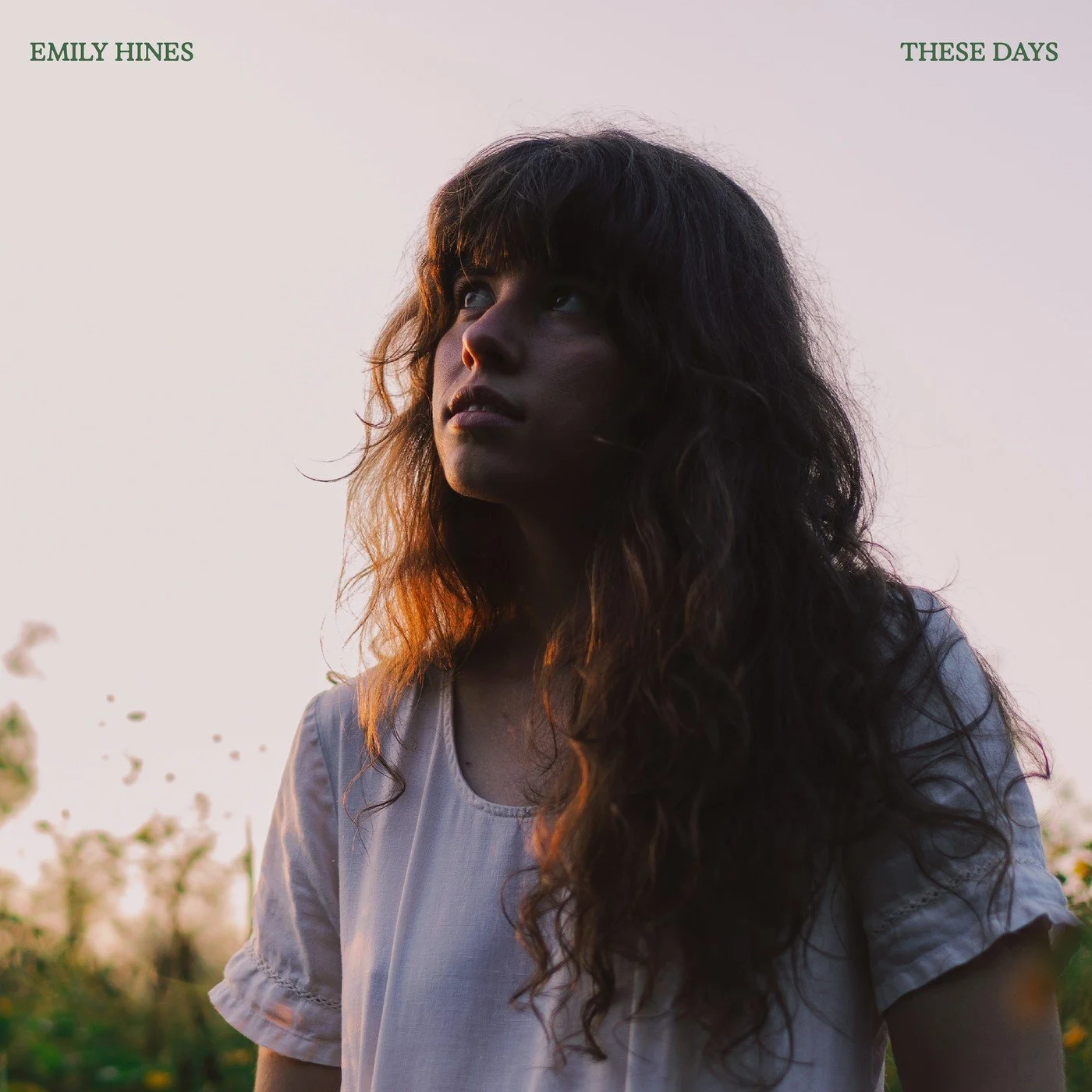
Hines describes herself as a “chronically-sincere farm girl,” growing up where the Midwest meets the south, and this kind of built-in twang, or country and western inspired sound, ripples throughout These Days—often slowly dancing between a kind of warm, soulful groove, and surprisingly stark, or spectral moments of introspection. And it is all like this. The environment that has been created, with thought and care. The world built that we are invited into. These Days, sonically, is a truly lo-fi affair, with the base of every song recorded to cassette—an unforgiving format, simply in terms of the imperfections, but that is part of the album’s charm. And I think part of Hines’ charm as well. Country, but in the city. An album that sounds like it is being brought to us from a different era. A collection of songs smooth, beautiful, and at times devastating in the sorrow they depict. An aloofness that comes with youth—someone already sure of themselves, but understands that there is, of course, more to know in time.
The album opens with a sway. Slow. Dreamy. Contemplative and tumbling as it gathers itself, it is held close before it is, with some hesitation, set down. Then it retreats inward. Stark, chilling. A little dramatic—or aware enough of the theatricality with which certain phrases hang just a little longer. It is then lusty. A kind of ecstasy to fumble towards. Soothing, soulful. Jubilant. Satisfied. Even in understanding there is an uncertainty, of course. The moment, as depicted, can and perhaps will end. It is all like this. The further turn inward. Tentative. Fragile. Giving in to a sorrow.
Hines writes from a place often casual, and observational. Regularly personal. Revealing as much about herself, or her experiences with others, as she wishes to. Even in the songs that are more about the feeling, as a whole, or the “vibe,” she is able to assemble these thoughtful and compelling narratives, or vignettes. Moments that speak to something larger than themselves. A want. Or desire. “I’m in my old ways again,” she laments at the beginning of the record, on the swoony, “My Own Way.” “Rewriting text to my friends, harboring old shame. I’m in my own way,” she confesses. “I know I’m gonna need to know what I don’t if I’m ever gonna have any hope to go on my own way.”
There is loss, here, too. Or heartbreak. A kind of wistfulness for someone out of reach, for whatever reason. Is it all like this—that was how I felt, as the warmth of “My Own Way” receded, and the icy, slow-motion sways of “Cold Case” began. Glacially paced, there is a patience and a tension that smolders just underneath in the depictions of a love that has been lost, and still lingers. “What if he’s a cold case,” she asks, unprompted, in the opening line. “A vision that I cannot shape. If I don’t give in—will I ever stop wanting him? What if he never lets me go—I mean, the company of his ghost. What if I cannot stop wanting him.”
“Why is it so hard to tell the truth,” she wonders. “Is love something that you choose or does it burn a hole right through you? Why is it so hard to understand the truth? Have I ever really seen you? Did I ever really see you?”
A bulk of These Days does come from this very personal, tumultuous introspection, and yes, Hines does that well. A small reprieve from it is when she slinks into a kind of airy, flirtatious, sensuality on the reserved and soulful “All of Our Friends,” which simmers with the kind of excitement and nervousness of a new romance. “Goddamn it feels good to be with someone who wants you round,” she exclaims through a quiet haze of lust. “Good god, you smell good when you’re kissing me on the mouth,” she coos later. “Do you mind if I kiss you cause you give me things I need? My legs in your lap, your hand on my knee. Will you hate me if this doesn’t last forever—all of our friends can see us together?”
Is it all like this. And it is impressive, the way the first side of These Days shuffles between a kind of aloofness resigned to a restless, nervy lust, attempting to outrun the memory of something we’ll never be able to. There is the compulsion, yes, but why it remains compelling into its second half is the spectacularly poetic and personal turns it takes. These fragments that are just devastating and evocative in how they are written and placed within. On the album’s single, “Cowgirl Suit,” Hines flirts, but cumbersomely—“Put on a cowgirl suit and simmered down my youth,” she muses. “Just trying to be something you’d be into.” Then later, continues to fumble with her desire. “I saw you walk in and it changed my whole day—is it by design when you’ve got nothing to say? I’m sorry if I’ve crossed a line. I’m still learning how to draw mine.”
I am always thinking about intimacy in contemporary popular music. Both in sound, and in writing. Or what the writing depicts. And there is of course an intimacy to These Days, because it was home recorded to a cassette—it is a little muffled and a little distant, like the sounds of a conversation you cannot wait to join, happening behind a door you are about to enter. But Hines has a true talent for crafting these terribly intimate and often haunting or sorrowful portraits. “I’ve been thinking about Christmas and the tracks that we left in the road,” she recalls on “Callin Ya,” at the top of the album’s second half. “How I cried when it snowed. In your arms, on Christmas Eve. Just you and me.”
Or, in the final song on the record—“I’ll Never Know,” which is only available on the physical editions of These Days. “It makes perfect sense—growth and decay,” she observes. “I show up at your house, crying on your birthday. Maybe we know. Maybe we don’t.”
It is all like this. This is the question I return to. The question ask ourselves, and if you are like me, perhaps you ask this out of both frustration and despair and you ask it more often than you would like to confess. You see. Things are bad right now. Nothing feels good. And I am regularly reminded that this is not forever, and I understand that it is not always going to be like that. But. In that understanding, it is still difficult and sometimes it feels so impossible to know that there is something beyond what you are seeing right now.
There are these small, good things, that we hold onto. The promise of hope, or optimism. Or whatever. We take them. We look for them in perhaps places we shouldn’t, and when we find them, they do serve as the reminder. That it is all like this but it will not always be like this. And on “Cedar on The River,” Emily Hines offers, in her writing, just a brief glimpse into a kind of hope. There is a peace. An assurance, or an understanding.
“I fill my songs with the shit that I was too scared to say to their face,” Hines exclaims. “Sometimes, it takes a while to collect your thoughts. This whole time, I thought I was running in place, but it was all coming along.”
3. Brinkmanship (Nothing’s really bad. Nothing’s really that good, either.)
It’s called brinkmanship. And this is an expression that I had not given consideration to in a long time, but recently recalled it, and in doing so, what I understood is that it was, perhaps, a way into all of this. This. Is it all like this? I regret to inform you that it, in fact, is all like this, because you see, things are bad right now. Nothing feels good. At all.
It’s called brinkmanship. And, when I was much younger, I saw humor in this. Dark, albeit. But I read it as a punch line. And what I have come to understand now is that, yes, it walks a line in its intention. Because there is a bleakness, and a reach for a laugh, in how it lands. I am no longer as young as I once was and I find humor in very little now, the way I once perhaps was so inclined to. And what I have, here, specifically, is a better understanding of, and for, the place it comes from. Not the intention precariously balancing on a line but rather the moments leading up to that. Does this make sense? You will have to pardon me, for addressing you directly like this. Here it is not about what compels but rather what propels. What hurtles us towards something. And why we keep pushing ourselves forward. And how are we able to stop, if nothing feels good. At all.
It’s called “Brinkmanship.” It was originally published in Speakeasy, and it appears as one of the final pieces in Chuck Palahniuk’s 2004 collection of essays, Stranger Than Fiction. Only a few pages long, “Brinkmanship” serves, primarily, as an examination of a kind of entropy, and of mortality. Hardcore will never die, but you will. I will. I understand that. I have assured my best friend that I am not going anywhere, and she has implored me to hold on, because there is a hope that she and I are both clinging to that things, one day, will feel differently than they do now. When I was much younger, I was truly afraid of death but I am no longer as young as I once was, and I am simply no longer afraid.
We are propelled forward.
In the piece, Palahniuk breaks the fourth wall, and addresses the readers directly. “I’m writing this piece right on deadline,” he confesses, before he explains the concept behind the titular expression.
“My brother-in-law used to call this behavior ‘brinkmanship,’ the tendency to leave things until the last moment, to imbue them with more drama and stress and appear the hero by the ticking clock.”
When I was much younger I saw humor in this, reading it as a punch line. What I have now, in this moment that we have together, is a better understanding of, and for, the place it comes from.
Because there is the thing we are always trying to outrun. There is the exhaustion we are not able to evade.
This is how he ends the essay.
I’m sorry if this all seems a little rushed and desperate.
It is.
It’s called brinkmanship. This frenetic pace, heading towards an exhalation. A gasp. Then it does ultimately begin again. The rhythm of our lives these days. The cyclical nature.
And if you will grant me this kindness, because I wish to address you directly. The only deadline I am writing this on is my own. Nobody is truly asking. I think about the way Annhastaia Enuke carries her husky, resonant voice at the beginning of “Silk and Velvet.” The first few words are spoken slowly, before she gives herself the nudge, and begins to sing, her voice ascending with ease, and the sound of the plunky guitar strings underneath her. “Lately, I’ve been tired of all this running around. Not sure I can keep up with these people on the ground. Lately, I’m not sure if it really matters if I make a sound. Or, if I’m silent through the chatter.”
It’s called brinkmanship. And I think about Emily Hines, and the way she murmurs through the tape hiss, and the delicate strums of the guitar, on “Cedar on The River.”
“Sometimes, it takes a while to collect your thoughts. This whole time, I thought I was running in place. But it was all coming along.”
I am always looking for the places where things converge. Or collide. And in the act of convergence, or collision, what I am most fascinated with is what forms in the between space—when two things are slowly moving towards one another. I do not often think of myself as someone preoccupied with the serendipitous, and I will admit I am surprised at how this has all, inevitably, converged onto itself. These indicators acknowledge uncertainty and frustration.
We are looking, all the time, for moments, or glimpses, or for things that offer us reminders, however small, that it isn’t always going to feel like this. That there are reasons to be hopeful. That we will know comfort, or peace. We are always looking for things that assure us that maybe, in time, things will feel better again.
We are looking, all the time, for these fragments, or reflections of ourselves—and if not ourselves, our experience. Something that can cling to, tightly, to help us better understand something.
It’s called brinkmanship. Is it all like this. And there is this cynical nature. We are, throughout the year, always looking for beauty. Or, rather, listening. Listening with intention. Listening closely and personally. For the things that fascinate and compel. The moments that resonate deeper than others. And what, as the cycle ends and readies itself to begin again, do we wish to revisit. And why. And in revisiting, how do we approach in a way that remains thoughtful and sincere. Articulate.
You see the only deadline I am writing this on is my own. Nobody is asking for this. Nothing feels good. At all. But if you are like me, you are always looking for these glimpses. These small moments offering us reminders it isn’t always going to feel this way. The things that we hold onto and often take with us through the year, and into another.
It is cyclical. Perhaps this is something you, too, have observed. Where I find myself now is in such a similar position to where I found myself this time, last year. The rhythm of our lives these days. So it is, again, serendipitous. Or part of this unexpected convergence or overlapping of themes. And it is, of course, a cycle of songs. As it should be. On her album It’s Cyclical, Missing You, folk singer and songwriter Lily Talmers explores the nature of patterns. Or cycles. The ones that are not necessarily detrimental, and the ones it might behoove us to extract ourselves from.
In that, and maybe more than that, Talmers spends a lot of the album working through the notion of what it means to miss someone. Or how we miss someone. And how it can be difficult, at times, to understand if you do truly miss the person, as a whole, or, if you are missing an idea of them. Or who you thought they were, but ultimately did not turn out to be.
And there is of course weight to all of this. And what is impressive about It’s Cyclical is the way Talmers carries that weight, and creates something that is diverse or often eclectic in sound. There, overall, is such a playful or joyous nature to how the album sounds. It is warm, and an invitation of sorts. Organic and thoughtful, and, even in the moments where Talmers is joined by additional players, or more robust arranging—throughout, she does incorporate melodies and textures inspired by Greek folk music, which create a truly unique flair, there is a quiet kind of intimacy to the album—an inclusivity and a tenderness, even when it does stomp, or shuffle with angst, or grows a little snarlier in sound.
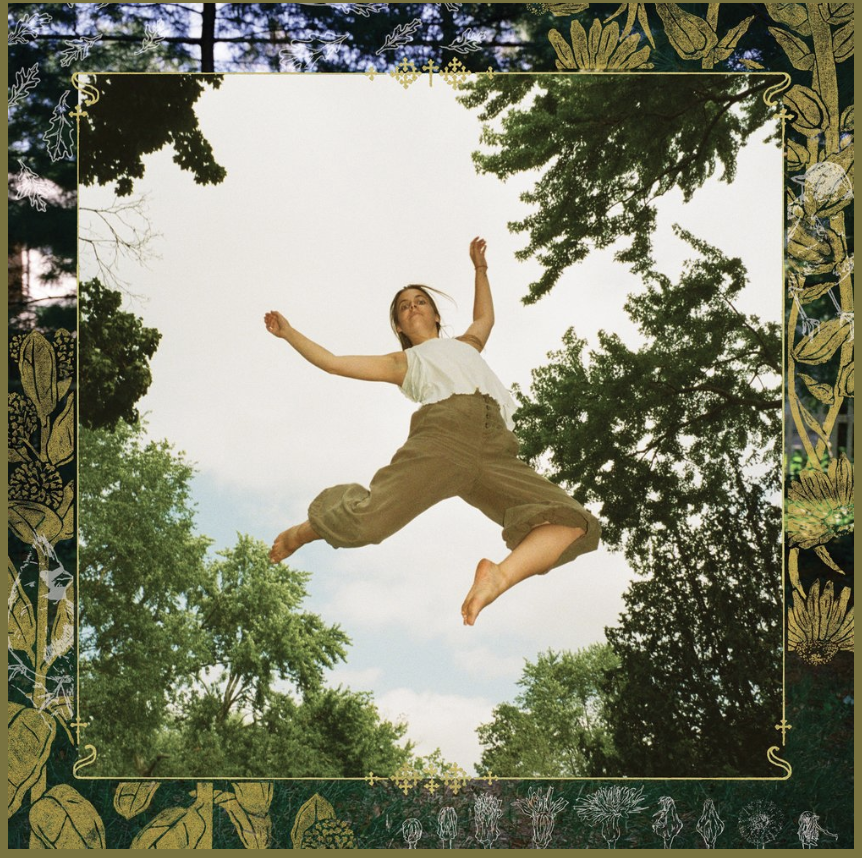
There is a soaring nature to It’s Cyclical, Missing You. It’s often fragile, gorgeous, and incredibly human in the ways it does ascend, and there is this remarkable thoughtfulness to Talmers’ lyricism. There is such a poeticism to her writing—in some places, it ripples up with an urgency, and there’s a breathlessness to how the song is quickly unfolding, like she simply cannot get all the thoughts out fast enough.
“To every sunset, I whisper I love you,” she explains on “Beautiful Place.”
“You are the last one of your kind that I will ever see. In this dream, you’re a leaf, and my dear, I’m the scientist studying cycles and trees. And since I want to give you all I never had I will toughen you up, and I’ll watch as you fall to your death. And I’ll visit as you decompose, and you’ll teach me new life, and new breath,” she continues, rushing from this verse, into the song’s chorus. “And knowing that most days I wanna be small as an apple, see, wide as a memory, drawing nearer to thee—where you lead, I will follow you.”
Elsewhere, on the title track, Talmers returns to this feeling—a kind of swelling or rushing of all the elements, continuing to reflect on the human condition, and the need for connection, in a vivid and earnest articulation. “And you follow your mind down—are things as good as they’re going to get,” she asks. “You think of a friend that you’ve lost long the way, knowing into her smile you could just fade away. Knowing love is a circle—360 degrees. Knowing part of you wells in the turn that had pleased her.”
Then, later, near the end of the song, “Our bodies are cycles, they’re changing in ways that are hard to keep straight and the mind is a maze. I am running this rat race, but take pause to say—darling, stay here awhile. It is cyclical, missing you. Reaching out—wishing to move you.”
It is cyclical. Is it all like this. I am always looking for these places where things converge, or collide, and in the act of, what I am most fascinated with is what forms in the space between. I am surprised at how this has all converged on itself. These indicators that do acknowledge the uncertainty and the frustration. That nothing feels good anymore.
It is one of the rootsier songs on It’s Cyclical, stomping and shuffling with resonant strums of the electric guitar, crisp, steady percussion, and a horn arrangement coming in as a bluesy punctuation. On “The Big Idea,” Talmers opens with a question, and wastes no time waiting for an answer, as she continues to push forward with a kind of frankness. It is cyclical, and it is something that I should be giving more consideration to. “What the hell’s the big idea,” she exclaims. “Nothing’s really bad, brother. Nothing’s really that good either. It’s all in your attitude.”
*
And it is cyclical. Is it all like this. And there is this line from the Laura Stevenson song “Blue Sky, Bad News,” that I have carried with me—or has haunted me, perhaps, for the last four years. “Maybe I’ll be better in a year—and maybe I’ll deserve it then.” We find ourselves at year’s end, and it is humbling, or sobering, to give consideration to what we had maybe wished for ourselves at the start of the new year, then facing the potentially difficult reality of where we actually are, now. This cycle on the cusp of beginning again. Maybe I’ll be better in a year. Maybe, in time, things will feel better again. We are always looking for the small, good things to cling to, when they find us.
There is a hype sticker on the front of Laura Stevenson’s Late Great, advertising it as the new album from an “American Treasure.” And I think that for somebody to be able to write a line—a single lyric, that has the power to haunt a listener for over four years—yes. I would agree. Stevenson is a treasure. Specifically for what she writes about and how she writes about it. There is a vivid, heartbreaking, and deeply personal nature to Stevenson’s lyricism. Stevenson, both in the songs on her self-titled album, from 2021, and here, writes about love. Not every song. But the connection, and the difficulties that come from that kind of connection, are often reflected. I contend, perhaps more than I should, that there is a difference between a “love song” and songs that are about love. There are expectations, or implications, with the idea of a “love song.” That it will be romantic, or sensual. About the chase. Or want. Or desire.
A song that is “about love,” can be about those things, yes. Sure. But there are other facets to love, and loving someone. Falling out of love. The difficulties of maintaining a connection. The disconnection. Late Great is a collection of songs that are “about love” because it is an album, primarily, about Stevenson’s divorce, which she depicts in an absolutely unflinching way—the moments of disbelief and regret, then the moments of anger and immobilizing sorrow.
And there is this line from Stevenson’s song, “Blue Sky, Bad News,” that I’ve carried with me for over four years. This moment, where the music swells just enough. A little rush towards something. She’s good at doing this, in the way her songs are arranged. They walk this line of slight tension, waiting for the moments of release. “Maybe I’ll be better in a year,” she howls as the instruments crash down around her. “Maybe I’ll deserve it then.” This happens throughout Late Great—an album not entirely constructed around the sound of something building until it bursts. But there are these moments, and lines, yes. These instances throughout that do thrill. And that are evocatively written, and the feeling Stevenson conveys seemingly with ease.
There is a nervy, jittery tension—quickly strummed electric guitar chords that lead us towards a jangly ascendance in the unrelenting “I Want to Remember it All,” where Stevenson sings the titular phrase through a gritted-teeth sneer. “Still here, I’m screaming, ‘I want to remember it all—even the hardest of harms your hurling at me,’” she confesses early in the song. “Can’t you hear my screaming,” she asks again. “‘I want to remember them all—all the arrows and the slings.’”
And there is a vivid and visceral way to see how the songwriting does ultimately work, and why it works so well, on Late Great. It is a personal album, yes, and Stevenson is writing about her emotional state, but it is also the imagery she crafts around those emotions that makes the album haunting as it is. There are these moments. The way her voice hangs, just for a second, at the start of the slow burning, “I Couldn’t Sleep.” “Like watching fireworks on T.V.,” she sings, before the acoustic guitar comes strumming in underneath her. “That’s how it was for me,” she continues. Imagery that then speaks to an experience much larger. A kind of dulling and disconnect, which she revisits later in the song. “I keep fixing on wall meets ceiling, and I’m relieved I’m not feeling much of anything.”
There are these lines. These moments. At the end of the album’s first side, “Short and Sweet.” It begins quietly, with just the acoustic guitar and Stevenson’s voice rising and falling as she carries the vocal melody. “Don’t ask me how I am,” she commands. A surprising tenderness in her voice for such an ask. “In fact, don’t ask me anything. I am not used to being wondered about.” The surprise, in the tenderness, comes when the drums and bass kick in, changing the tone of the song, in an instant, from something somber, but hushed, to something downcast, turning further into itself, but a little edge or snarl just underneath.
There are these lines. These moments. There is an unsettled ferocity, and tension, that propels the album’s title, and penultimate track forward towards both catharsis, and not an acceptance, but an understanding, however reluctant. Dizzying, as it swells, Stevenson exclaims as the song, as much for us, as listeners, to know, and as an assurance to herself, “My late great—it’s starting and ending. I’m standing alone but I’m standing.”
Starting. Ending. It is cyclical. Is it all like this. I am standing.
*
There’s this Instagram poem, “Intimacy These Days,” and I’m always thinking about it. The last two lines, specifically. “Should we try closing our eyes/should we try opening them.” My best friend sent it to me, a number of years ago, and for a while, whenever I would bring it up, and become sentimental about the closeness and the understanding it depicts, she would laugh, and sigh, and say, “Kevin, you know I didn’t write this, right? I just found it on here.” The poem itself might be a little cloying yes. But I am sentimental, and earnest enough about specific things and specific people that I honestly do not mind that it is potentially saccharine. In how it unfolds, as a quickly paced series of questions, or remarks, between two people, it reminds me of something my best friend had said to me shortly after we had become acquainted, and were getting to know one another, and figuring out a way to work on something creatively together.
She said, ‘The more you talk to someone, the more you have to talk about.”
I am always thinking about intimacy. Or writing about it. There, of course, are implications, or suggestions, with a word such as that one. Romantic and physical. But I am thinking about a kind of closeness. Literal and figurative. I think about intimacy w/r/t contemporary popular music when you can hear the room a song was recorded in—the hissing, or the static, that occurs in the distance between a note being played and that same note captured to tape. I think about it when you can hear the fingers scrape against the strings and neck of an acoustic guitar, or the way a floor creaks when someone adjusts their weight in the chair they are sitting in. The way you can hear someone’s mouth opening. The slow or quiet exhalation before you even hear a voice. I think about intimacy most often when I think about the way that two people have connected and remained so. More than anything else, the quiet understanding you share. The ways, both big and small, you arrive for one another. All of the gestures that say, “Thank you for finding me. Thank you for keeping me this close to you.”
I think about intimacy, and how this can be depicted in contemporary popular music. The places where you can find hints of this kind of closeness or this quiet understanding and assurance.
I am charmed, and genuinely fascinated with the idea of a creative endeavor that begins as a friendship project. There is a wholesomeness to it, in a way. Maybe that’s not the right word. But there is this surprising comfort in working closely with someone. You do ultimately challenge one another. Maybe you will disagree at times. But it, more than anything, I think provides the opportunity to grow alongside someone, and learn more about them in a way that feels very organic. You make this connection. Part of it is around this creative give and take, yes. But the dynamic becomes about so much more than that, over time.
There is a collision of personalities at the center of Two Birds, the second full-length album from the New York City trio Sister.. The group, now a trio with the inclusion of guitarist and producer James Chrisman, was founded originally by college roommates and best friends Ceci Sturman and Hannah Pruzinksy—a creative endeavor beginning as a friendship project, and quickly, the quiet understanding and intimacy from their connection became the subject matter for the songs they were writing together—“exploring the rare beauty of profound and close friendship, as well as its pitfalls,” as the press materials for Two Birds explains.
And there are any number of things that are impressive, or resonant, about Two Birds—I think the thing that is most striking about it is how truly dark of a record it ends up being. It is heavy—often noisy, or dissonant, in the textures it pushes itself into and wants to explore. And there is this sense of unease that courses through it, with the group creating and sustaining a kind of volatile tension that rarely if ever sees release. One of the album’s advance singles, “Honey,” specifically, exists in an atmosphere that is creeping and claustrophobic, with Sturman, through seemingly clenched teeth, depicting a contention unfolding, using fragmented and ambiguous lyrics that, even in how shadowy they end up being, are an extremely effective method of crafting a narrative we feel like we are just on the edge of understanding.
Two Birds’ opening track and one of its most compelling moments, “Blood in The Vines,” operates from a somewhat similar aesthetic. There is a haze above it, creating a low ceiling, but rather than creeping along with a kind of seething menace, it slinks, and slithers. There is something undeniably alluring, and truly seductive, about the way “Blood in The Vines” beckons its listeners. Bouncing along with intricate percussive elements, it does lure you into a groove almost immediately, as it pulsates with these little flicks of the electric guitar that, in time, open up into a snarling strum once the hypnotic, writhing chorus arrives.
I hesitate to say that “Blood,” in its lyricism specifically, is, like the thesis statement for the rest of the album, but there is a boldness to it, in how Sturman and Pruzinsky are willing to depict the frustrations and moments of tension that certainly come from simply knowing someone so well, and working with them so closely in this capacity, writing in these shadowy vignettes that are evocative—“We share the water, I wash your hair,” Pruzinsky quietly sings in the song’s opening line. “When you’re impatient your skin burns red. You grabbed the wrong hand—we were just friends. I overthought it. I dropped your wrist,” which reveals just as much, or as little, as the duo wishes to.
I am always thinking about a kind of intimacy. A quiet understanding. And the way, even if there isn’t a creative project centered between the two of you, that you do challenge one another, or push one another, to grow, or to be thoughtful in ways you perhaps had not considered. There is a tension, or contention, that is depicted the further into “Blood in The Vines” we are taken. It’s fleeting, and more of a brief moment of frustration. “Said we’d go dancing, save our bad day. We’re always fighting, and that’s okay. Mirror your movements—but not like this. Leave room for Jesus—can we just dance?”
The phrase, and it is a feeling, too, I guess, that I thought of when writing about Two Birds, originally, over the summer months, is the same one I that I return to now in thinking about the album, and in thinking about the intertwined nature of Sturman and Pruzinsky, which is when something feels like both too much but also not enough. It is a delicate balance to maintain, and the balance can be upset. But that is the thing. About a connection like this. In an upset balance, and with that much investment from both, there is always resolution. And an assurance, that you are more or less stuck with one another.
There is this slow-motion, beautiful, and often fragile ferocity that rises later in the album, on its title track. It never really gets away from the band, which is impressive, in the way that they conjure and then sustain this kind of torrential sound to the level they wish to keep it at. As it smolders, and then churns, the lyrics depict time and change, but the ways we remain connected. And I am always thinking about intimacy. And this kind of an assurance, and comfort. “You’re a house I’ll come back to with the lights all turned on.” The quiet understanding.
Should we try closing our eyes. Should we try opening them. The more you talk to someone, the more you have to talk about. I’m always thinking about that. A kind of intimacy. A quiet understanding, and acknowledgement. An assurance.
“Why does it feel significant? Why do I have to tell you about it,” Lucy Dacus asks in the song “Modigliani,” which is placed early on within the sequencing of Forever is A Feeling. And she depicts this moment. And, I mean. The album itself depicts a number of things—or, rather, it is both a response, and a reflection, around something specific. But slowly oscillating on the outside of the album’s larger narrative, there is a moment like this, where she details, vividly, this kind of closeness. Or a fondness. An admiration. A kind of quiet understanding.
The song opens with Dacus sharing a small detail from her day—the dedication on a plaque from a park bench leaving an imprint on her shoulder. “I carry David’s name until it fades,” she muses. The more you talk to someone, the more you have to talk about, and the need to share this minutiae of her day, is used as a way into explore the dynamics of her friendship with Phoebe Bridgers. “Trying to fall asleep, back flat on the floor,” Dacus continues. “While you were eating continental breakfast in Singapore. You make me homesick for places I’ve never been,” she confesses, with a sigh. “How’d you do that—how’s tomorrow so far?
The song itself is, of course, about so much more than a park bench plaque dedication imprinted onto a shoulder, and the small, or seemingly insignificant experiences of our days that we feel compelled to divulge to our closest friends, but that is, of course, what is most fascinating for me. “I should know my neighbors’ names. I should not stay up so late,” Dacus concedes in the final chorus of the song. “Modigliani melancholy got me long in the face—but I feel better when you call, just to tell me how you are. How do you do that?”
The more you talk to someone, the more you have to talk about.
And there is a sense of longing that courses throughout Forever is A Feeling. A palpable sense. Practically from the moment it begins, right up until the last note plays. And, yes, Dacus is writing mostly about a romantic longing, or yearning. But there is a moment like “Modigliani,” which depicts the need to maintain the connection with someone you are close to even when they are on the other side of the world, and there is a kind of charm, or wholesomeness to it, that I find terribly endearing.
Longing, and desire, play central roles in Forever is A Feeling, a collection of songs that is ultimately about Dacus’ romantic relationship with singer and songwriter, and her longtime friend, and Boygenius bandmate, Julien Baker. The narrative, unfolding in a somewhat nonlinear way, begins with a bashful confession, ends with a tender, earnest declaration, and in between, depicts, with a sensuality, the dizzying moment when you surrender to desire, or want, and the small instances of hushed affection you share.
Forever’s first single, “Ankles,” propelled forward by the string arrangement it opens with and the slinky, clattering rhythm it finds itself in, is bold, I suppose, in how it directly addresses desire—and what desire ultimately asks of us. “What if we don’t touch,” Dacus sings. “What if we only talk about what we want, and cannot have,” she continues, before adding with a pouting smirk. “And I’ll throw a fit.”
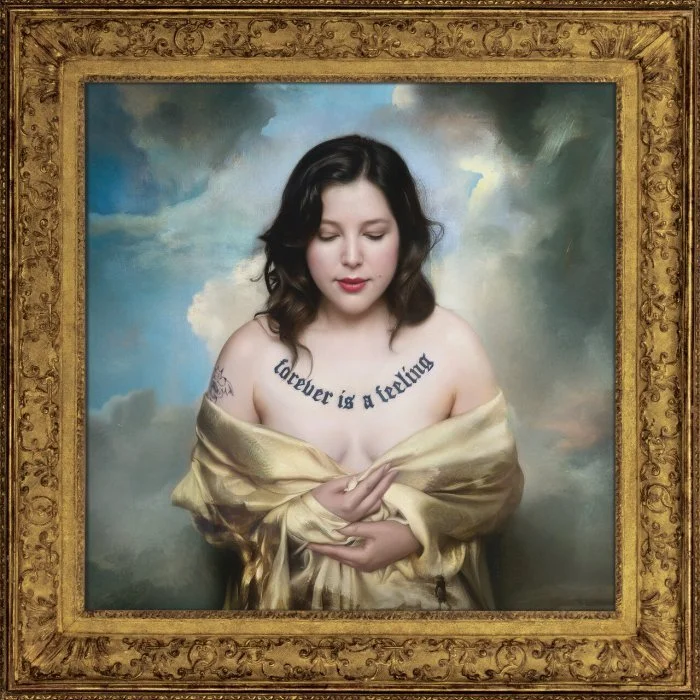
“So bite me on the shoulder,” she commands, in the simmering build-up to the dazzling textures of the infectious chorus. “Pull my hair. And let me touch you where I want to—there, there, there, there.” Writing about sex in contemporary popular music is nothing new. I suppose, though, it is not something that Dacus writes about often, and in the past, when it has found its way into her lyricism, it has been as a little bit of an aside, or done partially in jest. But here, she approaches it not with a seriousness, but it is meant to be taken seriously. Or understood. That desire is something we feel, and we surrender to. “Pull me by the ankles to the edge of the bed and take me like you do in your dreams,” she exclaims, sharing this personal detail with a tactful kind of sensuality that manages to walk a line between coyness and eroticism. “I’m not gonna stop you. I’m not gonna stop you this time, baby.”
“Ankles” is about being brought to a specific moment, and then surrendering yourself to whatever comes next. “Best Guess,” then, is about what it is like to find yourself, and exist, within that—the what comes next. There is still desire depicted, yes, but it transcends just the giving into physical attraction, and the want for that kind of attention and satisfaction. There is a tenderness, and a reflective nature to Dacus’ writing here, mirrored in the smoldering and reserved way the song is arranged, and slowly tumbles itself forward, giving her time to exist in this space, and to observe gently and thoughtfully.
“Best Guess” wastes no time, and the song, even in this kind of immediacy, or unrelenting nature, operates from a place of reserve, which is something Dacus does throughout Forever is A Feeling. There are moments that are a little more explosive, but far fewer when compared to the raucous nature of both Historian and Home Video. But there is beauty in the reserve. Or the more restrained nature of these songs. A chance to reflect with care, or quiet, on longing, and desire, and the places that those experiences take us to, and what we do when we arrive there. “Best Guess” places us, from the instant it begins, into a kind of hushed, romantic intimacy, vividly and poetically depicting a seemingly insignificant interaction, which Dacus then uses as a way to thoughtfully elaborate. “Clasping your necklace, zipping your dress,” she begins. “Hands on your waist, kissing your neck. I love your body. I love your mind,” Dacus continues, taking this fragment, and turning it inward. “They will change, so will mine.”
There is an unabashed nature to the way Dacus writes about romance and affection on Forever is A Feeling, specifically on “Best Guest,” as she arrives at the song’s dazzling bridge. “You may not be an angel but you are my girl,” she confesses. “You are my pack a day. You are my favorite place. You were my best friend before you were my best guess at the future.”
Forever is A Feeling is bookended with its most poignant, or captivating moments—and, yes, they are of course about romance, and the acknowledgment and understanding of specific feelings. But there are sentiments found within both “Big Deal” and “Lost Time” that do transcend this context. Should we try closing our eyes. Should we try opening them. The more you talk to someone, the more you have to talk about. And something I often think about is not the how of people enter into our lives but the when. Circumstances leading up to the right time. And the connection formed, and sustained. The quiet understanding and assurance. “Big Deal,” the album’s proper opening track, is delicate, though rich and resonant in the way it plays with its textures and tones. And yes, it is of course about the moment—the instance when Lucy Dacus and Julien Baker did confront their romantic feelings towards one another. Written with an evocative grace, what can be taken from this song is what Dacus sings in the chorus.
“There’s something I want you to understand—you’re a big deal.”
Longing, and desire, present throughout the album, also ripple through the gorgeous, and ultimately cathartic final moment, “Lost Time.” Dacus pines through distance, “I wonder how long it would take to walk eight hundred miles,” she asks in the first verse, then recalls fleeting moments of physical intimacy in the second—“I wish we could have a place that we could share, not only stolen moments in abandoned halls. Quiet touch in elevators, and bathroom stalls.” And the song itself is not about regret, really, but it is Dacus reflecting on how she wished she had made her affections known sooner than she did. “I love you and every day that I knew and didn’t say is lost time,” she sings in the chorus.
Longing and desire do ripple throughout “Lost Time,” yes. But there is this depiction of closeness, and understanding, that does transcend romance alone. And it is a stunning thought, or admission, to end the album with. These kinds of small things about someone you admire, or appreciate. “I notice everything about you, I can’t help it,” Dacus explains as the song ascends quickly from the swooning delicacy it had been constructed with into an explosive, distorted crunch that offers punctuation of the sentiments. “It’s not a choice,” she concludes. “It’s been this way since we met.”
*
“Sometimes the truth is, don’t wanna live anymore like this.”
Is it all like this. It’s called brinkmanship.
She had me at the title of the song. “Everybody Knows I’m Sad.” It’s tucked well into the second half of the record, and your eyes do certainly gravitate towards an expression such as that when you see it placed within a tracklist. And she had me with that line. And I think there is intention in the order with which the words are placed. And, I mean, that certainly has to do with how many syllables you can realistically carry through a vocal melody. But it is also, I think, a means to command attention. Or to surprise the listener with a seemingly bold and potentially unexpected admission.
There are the two additional words, then, that pull it quickly from the total darkness you perhaps believed it to, or wished for it to be heading into.
The context is important. “Everybody Knows I’m Sad” is less about Marina Diamandis’ flimsy relationship with her own mortality, and more a dramatic reflection on loneliness. As the song twinkles and flutters, and then lurches and subtly writhes through its chorus, Diamandis is full of longing. Less for romance, or pleasure—these are the things she often writes about craving in the other songs found in Princess of Power. And I mean, there are moments here that imply physical connection with a romantic partner would be welcomed, or appreciated. “I’ve been getting so lonely, and I’ve got nobody to hold me,” she laments near the end of the first verse, but she is longing, as she spirals through the song, to feel a connection with anyone.
“I’ve got nobody to hang out with,” she sighs in the opening line. “I’ve got nobody to go watch a film on a Sunday.” “I’ve been so lonely all of my life—don’t know if I can survive,” she exclaims shortly before the chorus. “Maybe I’m not built for this kind of connection. Maybe I was born to live my life alone.”
She had me at the title of the song. There is a frankness to it that isn’t funny, exactly, but does elicit a perhaps nervous laughter. A recognition you are ultimately comfortable with, but others are uncertain what to make of it. And she had me with that line, found within the first verse, simply because of the kind of listener I am. It is second nature to me to always be looking for the sad thing. “Sometimes the truth is, don’t wanna live anymore like this.” She didn’t have to include the last two words.
Is it all like this.
And there is, of course, contemporary popular music that is more challenging to analytically write about, comparatively. Something bright and dazzling—like, pure pop music, such as Princess of Power, presents challenges because it is an album that is, overall, far less concerned about poignancy in lyricism, and is much more interested in crafting and sustaining a specific tone. Or a “vibe.” Marina Diamandis, even in declaring that everybody knows she’s sad, has created a playful and flirty album. One that wants to have fun. And it wants us, as listeners, to have fun along with it.
And this is, perhaps, a bit of a crass description, and I do wish that there were a better or more articulate word to use—throughout Princess of Power, Diamandis works from a convergence of feeling both extremely lonely, and extraordinarily horny. “I wanna swim topless in the ocean,” she exclaims on the jubilant, rollicking “Rollercoaster. “Have sex on the sand, on the grass, in the garden,” she continues, before refusing to mince her words. “Spread me like a picnic on the floor in the forest.” Later, on the moody, lusty “Metallic Stallion,” she coos, “My metallic stallion races off but I chase him fast ‘till I get on top—‘till his reins come off.” Diamandis wants to fuck. Perhaps as a means of escaping her loneliness even briefly. Or, perhaps it is a way to take ownership of her sexuality, and her identity.
Princess of Power, Diamandis’ sixth full-length overall and third since shifting from performing under the moniker Marina and The Diamonds, to simply just her first name, often stylized in capital letters, is an album that truly exists within its own self-contained world. I tell you that because you do, at times, have to have a willing suspension of disbelief with it. It is fun, and often exhilarating, but it is also regularly quirky, and there are a handful of moments where the lyrics are just cringey. I am thinking, specifically, of the place in the album’s blistering third track, “Cuntissimo,” where Diamandis, in a way that walks a line between being totally aloof and completely self-aware of how she sounds, asks, “Do people still say YOLO?”
And, there is of course contemporary popular music that does not wish for you to analyze it. That’s not the intention. Princess of Power is blindingly bright in how it shines, and it is not all that concerned with poignancy in lyricism. Not really. That doesn’t mean there are not moments here worth analysis, our consideration, but the album is far more interested in creating a vibe, and in that, asks us as listeners to lose ourselves within it. It is escapism. Existing in a self-contained world that Diamindis does quite literally welcome us into during the opening track. “I’ve lived the sweet and I’ve lived the sour. Been living life locked up in a tower. But now I’m blooming like a flower,” she sings before the declaration. “Welcome to my world, princess of power.” It is a pull onto the darkened dance floor where there will be little if any reprieve from the relentlessness of the beat. The album as a whole is meticulous in sound—regularly energetic, or invigorating, often structured within robust, electro-infused synth-pop that propels itself forward by post-disco inspired rhythms and specific moments where the music swells with impressive theatrics. The chorus to the title track is a great example of that, as is the anthemic “I <3 You,” placed within the final third.
There is contemporary popular music that does not wish for you to analyze it. If anything, at least here, or throughout a bulk of Princess of Power, Diamindis would rather you experience it. Put yourself in this world she has created. It’s quirky and lusty, and in the willing suspension of disbelief, it does ask you to lighten up, and perhaps not take yourself so seriously when you hear her ask if people still say “YOLO,” because “Cuntissimo” is weird and fun as hell and is one of the more outwardly powerful moments on the album, quickly pulsating with exuberance, tossing us as listeners into the undulation, and hopes we surrender to it.
There is contemporary popular music that does not wish for you to analyze it. Diamindis, overall, is not preoccupied with poignant lyricism. But. That does not mean there are not flashes throughout that are worth that kind of consideration. The admission, “I don’t want to live anymore like this,” on “Everybody Knows I’m Sad” is one of those moments, as is the way she plays with the sensuality and lust on the smoldering “Hello Kitty.” Again, in the title, and in the way she uses the titular phrasing within the song, it does ask for us to remove ourselves from however seriously we take ourselves and prefer our songwriting, or popular music listening to be. It is a song, ultimately, about desire or hunger, and submission—sexual, yes, but also emotional, I think. And there is the way that lust actually hangs and is sustained through the song—like Diamandis is using her desire as an instrument, or an additional element within the fabric of the song. “Babe I’m in tense, don’t you know what I meant,” she sings in a way that is a little bit of a threat, or a warning. “When I say I like you, that means I’m obsessed.”
It is playful, and cloying, sure, the way she explains, “Hunt you from afar like a jaguar, ‘till you say ‘Hello, kitty,’ make me go ‘rah-rah’”—but it does create this feeling. Something visceral. Of giving in. The want leading us to more want, and a moment just before. Surprising in how resonant it is. The space between loneliness and just being really horny, and what happens when those two things converge slowly. Because even in the willing suspension of disbelief, and in the world that has been created for this album specifically, it is ultimately a kind of human experience—to feel those things happening at once.
*
It’s called brinkmanship. And I never said that writing about music was easy. I think, in the end, the trick is to make it appear effortless to the reader. That they are not aware of all that goes into the words once they ultimately end up on the page. Writing about specific kinds of music can be more difficult than others. Instrumental music presents a unique set of challenges because there are no lyrics for you to analyze. You are asked to try as you are able to detail the sounds, yes, but also the feeling.
How does the music—the instruments. The notes. The way things are arranged and how they come together. How does that become a language and how do you decipher it.
It isn’t impossible to write about. No. It just requires, I think, articulation. And sincerity. I think the sincerity, more and more, is the most difficult to find, and to sustain.
Vega Trails, as a project, is not looking to defy genre, or classification. If anything, I think the group is just asking you to give consideration, or simply notice, where there are overlapping elements, or facets, between a generalization of aesthetics. Originally founded as a duo, between Milo Fitzpatrick and Jordan Smart, the bio on their website describes Vega Trails as “chamber-jazz.” And, yes, sure. Jazz. Fitzpatrick plays the double bass, and Smart plays the saxophone. And their work, or the pieces they perform, is perhaps informed, or rooted, in a kind of jazz composition.
I would contend that isn’t where the similarities end, but it is where we are asked to have an understanding that jazz as a style or genre or whatever is more than its past. More than just Miles Davis or John Coltrane. Bill Evans. More than the 1950s and 60s. More than the Marsalis family. Wynton. Branford. Ellis. More than the performers who continue the lineage, or sound, today. Kamasi Washington. More than a kind of caricature of itself—it isn’t “elevator music.” It’s not simply music to relegate to the background. And yes, I mean, you can put on a jazz record, from any era—often instrumental, and sure you can have it playing “in the background” while you do something else. But it is listening that does ultimately ask something of you. It wishes for you to be an active participant. To feel the notes ascending and descending. To try to follow where a piece will take us, and perhaps be surprised at how we got there. A kind of entrancement occurs.

The word “cinematic” is used twice in the short biography about Vega Trails, and about Sierra Tracks, on the project’s website. And, I mean. Yes. That is the nature of a bulk of this album and how it sounds. And yes, there are only so many words that convey a specific enormity of sound. And it is not that I am less concerned with that. Because the size of Sierra Tracks, or its ambition, I guess, as a whole, does play a large role in how it sounds, and how it feels to listen to or sit with. I think what compels me is to take note of the places, or of the ways, that Fitzpatrick and Smart have shifted away from the restraint they worked from within on their debut, Tremors in The Static. There was this haunted, cavernous feeling to Tremors. Even in how dexterous the compositions were, there was a claustrophobia to it. And in this sense, the quiet or the tension that simmered within, it operated within this space that bridged jazz, or “chamber jazz,” or “modern classical,” with ambient music.
And there are still quiet, or restrained moments on Sierra Tracks, but the objective, overall, across the 10 compositions included, is one of dazzling ascension, and it is often jaw dropping in how these pieces work to collect themselves, building towards something—a specific moment within the structure that can surprise, or startle, even after listening to the record countless times. The moment when it soars. Soars as high as it can go. Sometimes with a grace and fluidity, and slight haze, that is a marvel to hear, and experience. Other times with a sense of surging immediacy.
Across the 10 pieces, or compositions (I, again, am remiss to refer to them as songs because of the genre and nature) Vega Trails does not play their hand too early in the record, but they do reveal, within the first three tracks, where they are willing to take us, as listeners—a truly remarkable run that continues to double down on itself in terms of stirring and evocative textures, heights, tension and release, and meticulous pacing. And I do perhaps overuse the descriptors “dazzling” or “shimmering” when writing about music. Though it is done as a means of trying to convey both what something sounds like, and how it feels. It is when there is an inherent brightness, or boldness. “Largo,” the album’s opening track, arrives there in time. To the moment that shimmers. But the buildup is so intentional, and that is what makes this album so compelling and captivating. The way the instruments circle around one another, not in a way that is menacing or of opposition, but just trying to figure out where they all fit into the rhythm, and the melody that is revealed, and how those elements, once they take their places, propel us to that point—the mournful sounds of the saxophone, the plinking and slapping of the thick bass strings. The rattling and clattering of the percussive elements. The lush, warm string accompaniment. All collected and brought to the place where it will either buckle, or ascend beautifully and in slow motion. There is this huge pause before it happens. Like, three seconds of silence that are used as another instrument, or element, within the piece, creating this place of suspension before the saxophone melody comes back in, with more palpable emotion than before, carrying us to a thrilling and yes cinematic conclusion.
And for as enormous, and robust, as many of the pieces on Sierra Tracks grow to be, Fitzpatrick and Smart do still work from places that are more skeletally, or sparser in arrangement, comparatively, or at a little hazier, or more cavernous in sound—one of the places that is similar at least in tone to their debut, is the second track, and the first piece released as a “single,” in advance of the record in full—“Els,” which bounces along with a quickly plucked double bass, before the saxophone melody wanders in, and finds its way just above that rhythm—it doesn’t creep along exactly. There is a saunter to it, but one that is reserved, or tentative, and as it unfolds over the six minutes and change, “Els” is ever shifting in terms of texture—tightening itself up with a cello, and the slight glisten of a piano, before the pacing changes, slightly, and the haze lifts, welcoming in the warm twinkling of a marimba, before it dramatically undulates and swirls together, dizzyingly, sauntering forward into a quiet resolve.
There are, of course, myriad places across Sierra Tracks that are “cinematic” in sound—enormous, stirring moments that are impressive in both how they are arranged and executed, but also in what we feel, or how we respond, when listening. It is an album that does, or wishes to, surprise, or startle, when something inherently big, or bold, occurs. And even in knowing that there is a large-scale moment of ascension found within “Murmurations,” when it does hit, every time, it still sends a thrill. The track, through a quiet but confident rhythm, slithers, and does so with a sense of immediacy, moving a little faster or with more purpose—Fitzpatrick’s bass strings thick and resonant, with an eerie, somber cry from the saxophone held, and sustained, drifting through. The arrival of the piano softens, or makes “Murmurations” more gentle, as it finds its way into the motif, or melody (this returns, later, on the aptly titled “Murmur,” in the second half of the record.) There is a pause, then. Two seconds. And this silence does truly hang. A suspension. You hold your breath. The role it plays—it is like an instrument, or another element, within the piece. You understand something is going to happen, because there is just the slightest surge before everything cuts off.
“Murmurations,” then, comes crashing back together—a frenetically tapped cymbal and crunchy hit of the snare drum, and a progression of notes, moving back and forth on the piano, take the this piece, and do literally run with it, creating an arresting sense of urgency as it rushes forward, then slows, plunking itself into precise, final steps.
It’s called brinkmanship.
Sierra Tracks ends not with something as gigantic in sound, or scope, but with a piece that is pointed inward, and then a brief epilogue, of sorts, as a final, small, exhalation. “When This is Over” is one of the pieces that has the most genuinely interesting textural elements to it as it literally quivers, and wriggles—Smart’s saxophone playing a somber melody in bursts, which floats just above a rippling synthesizer tone, and the mournful sound of low, piano notes. It is the most bittersweet-sounding track of the collection, though calling it “sad” does not really convey how, in the wavering and swishing of all the elements, even with the sorrow it does conjure, there is this sliver of hope, or for something more, that you catch the faintest glimpses of. And I hesitate to say there is hope, but there is a kind of optimism, or resolution, found in “Tokyo Sleepwalk”—the final track, which is truly playful in the groove finds, and offers a stark contrast in tone with its predecessor—it’s infectious, and short, so the closest thing here to a “pop song,” and in how it rollicks through percussive slaps and dexterous, slinking bass notes, there is a bit of a smirk to it, with an antiquated and smoldering synthesizer, and the twinkling of the electric piano providing a moment of theatricality or added depth before the the slinking finds its stopping point.
A stopping point.
It’s called brinkmanship. The only deadline I have been writing this on is my own. Nobody is truly asking for this, and if you will permit me, a final time, to address you directly and break the fourth wall that exists between us—I realized that if I was able to make it this far, I would have to find the stopping point.
Something conclusive. Or an ending.
Is it all like this? I cannot take much more. Paradise begins in hell and you see, things are bad right now. In fact, nothing feels good. At all. And you see, I am clinging, as perhaps you are too, to a promise. An idea. Moments however small. Unanticipated in where you might find them. Reflective, or thoughtful, or poignant. Immersive. Wondrous. We find them and we hold them close and carry them with us because they do become the shreds of hope we are reaching towards, our arms outstretched and straining. These fragments. The hope that we desperately cling to. Nothing feels good but there is this potential that someday, I will feel differently than I do now.
I’m sorry if this all seems a little rushed and desperate.
It is.
